Georges Bastard
1881 – 1939
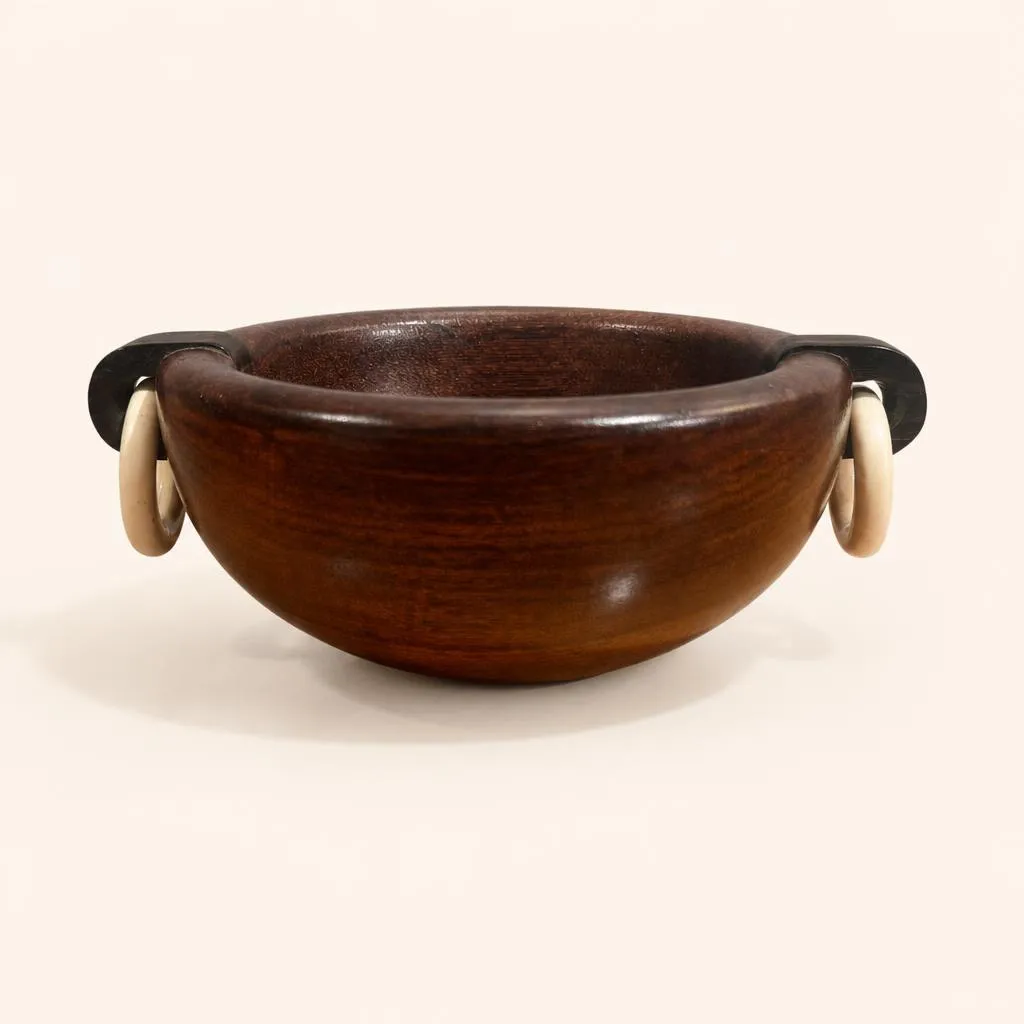
Georges Bastard was a prominent French master craftsman (”tabletier”), fan maker, sculptor of precious materials (mother-of-pearl, ivory, tortoiseshell, horn), and ceramicist of the Art Deco era. Heir to a long artisan tradition that he elevated to a fine art, he distinguished himself through the geometric purity of his creations and the celebration of raw materials. As director of the École des Arts Décoratifs in Limoges and later head of the Manufacture Nationale de Sèvres, he left a lasting mark on interwar French decorative arts.
Biography
Born into a traditional family of “tabletiers” in Andeville (Oise), he trained from an early age in carving mother-of-pearl, ivory, and horn. In the early 20th century, he revolutionized the art of fan making by introducing sticks and guards defined by modern, architectural simplicity.
A central figure in the shift toward Art Deco, he moved away from floral ornamentation to emphasize the intrinsic elegance of fine materials. His boxes, vanity cases, bottles, and desk accessories featured streamlined geometric silhouettes and meticulous finishes.
Heavily awarded at the landmark 1925 International Exhibition of Decorative Arts in Paris, he collaborated with premier designers of the era, including cabinetmaker Émile-Jacques Ruhlmann, lacquer artist Jean Dunand, and decorator Clément Mère, crafting exquisite inlaid accents for their furniture.
Appointed director of the École des Arts Décoratifs in Limoges in 1928, he introduced modern design principles into regional porcelain production. In 1938, he assumed the directorship of the Manufacture Nationale de Sèvres, holding the position until his early death in 1939.
« Georges Bastard elevated raw precious materials, mother-of-pearl, ivory, and horn, by subjecting them to absolute geometric rigor, transforming traditional tabletmaking into a major 20th-century art form.»