Albert Cheuret
1884 – 1966
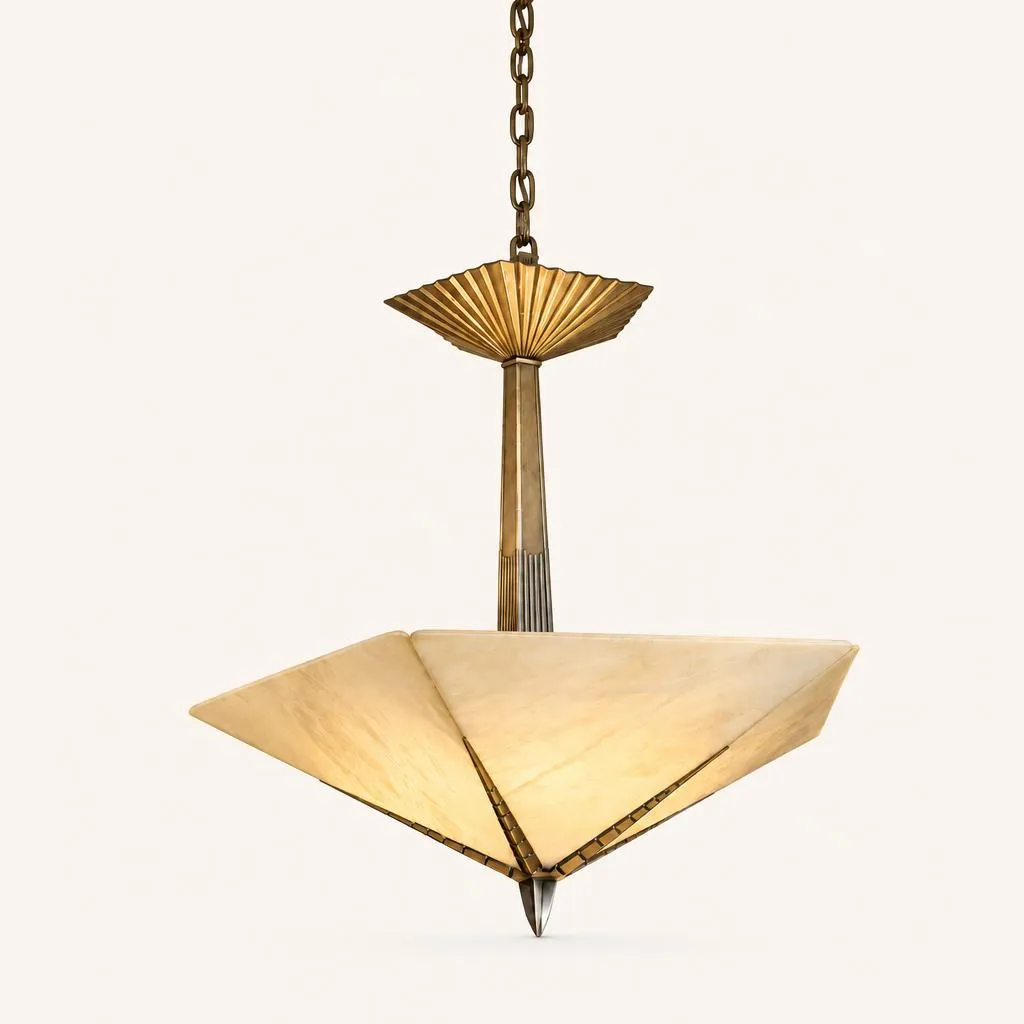
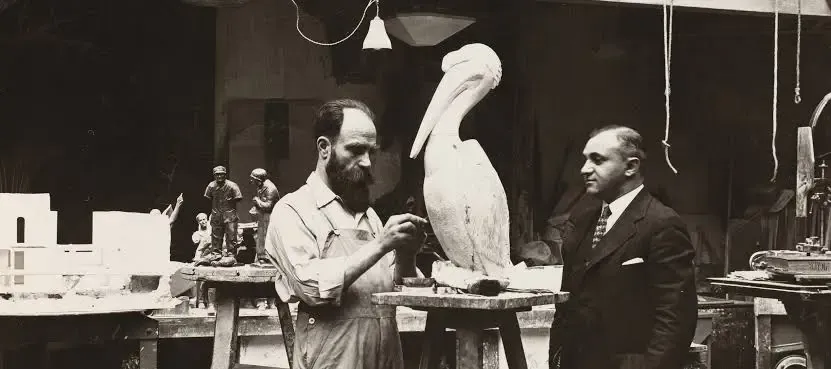
Albert Cheuret was a prominent French sculptor, bronzeworker, and designer of the Art Deco era. Celebrated for his masterly pairing of patinated or silvered bronze with translucent carved alabaster, he distinguished himself through the creation of lighting fixtures, console tables, and decorative art of extraordinary poetic elegance. Inspired by botanical and zoomorphic motifs (storks, herons, birds of paradise, tulips), his work seamlessly merged sculptural rigor with modern illumination.
Biography
Trained in sculpture under Jacques Perrin and engraving under Georges Lemaire, he developed a complete technical mastery of metalwork and stone carving. He established his studio and exhibition room at 22, rue de La Pépinière in Paris, where he created and sold his collection.
He developed a unique decorative lexicon by pairing sculptural bronze mountings (patinated, gilded, or silvered) with hand-carved alabaster shades and bowls. The soft, warm light diffused through the veined stone complemented his stylized fauna and flora forms.
At the landmark 1925 International Exhibition of Modern Decorative and Industrial Arts in Paris, he achieved critical acclaim with his boutique stand on Avenue Victor-Emmanuel III. He unveiled iconic designs, including his famous “Bird of Paradise” chandelier and “Tulip” lamps, establishing his international reputation.
Beyond lighting (sconces, floor lamps, nightlights), he produced notable sculptural furniture and decorative items, such as his celebrated “Heron” console table, mantel clocks, and carved mirrors. Passing away at the age of 82, his creations remain among the most sought-after works in Art Deco design history.
"Albert Cheuret turns light into a sculptural material: under his chisel, bronze fauna and flora support translucent alabaster to transform every lamp into a living work of art.”