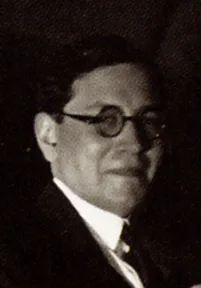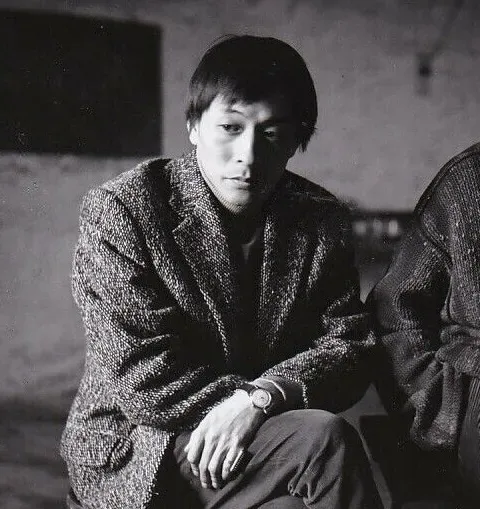
Akira Kito
1925 – 1994
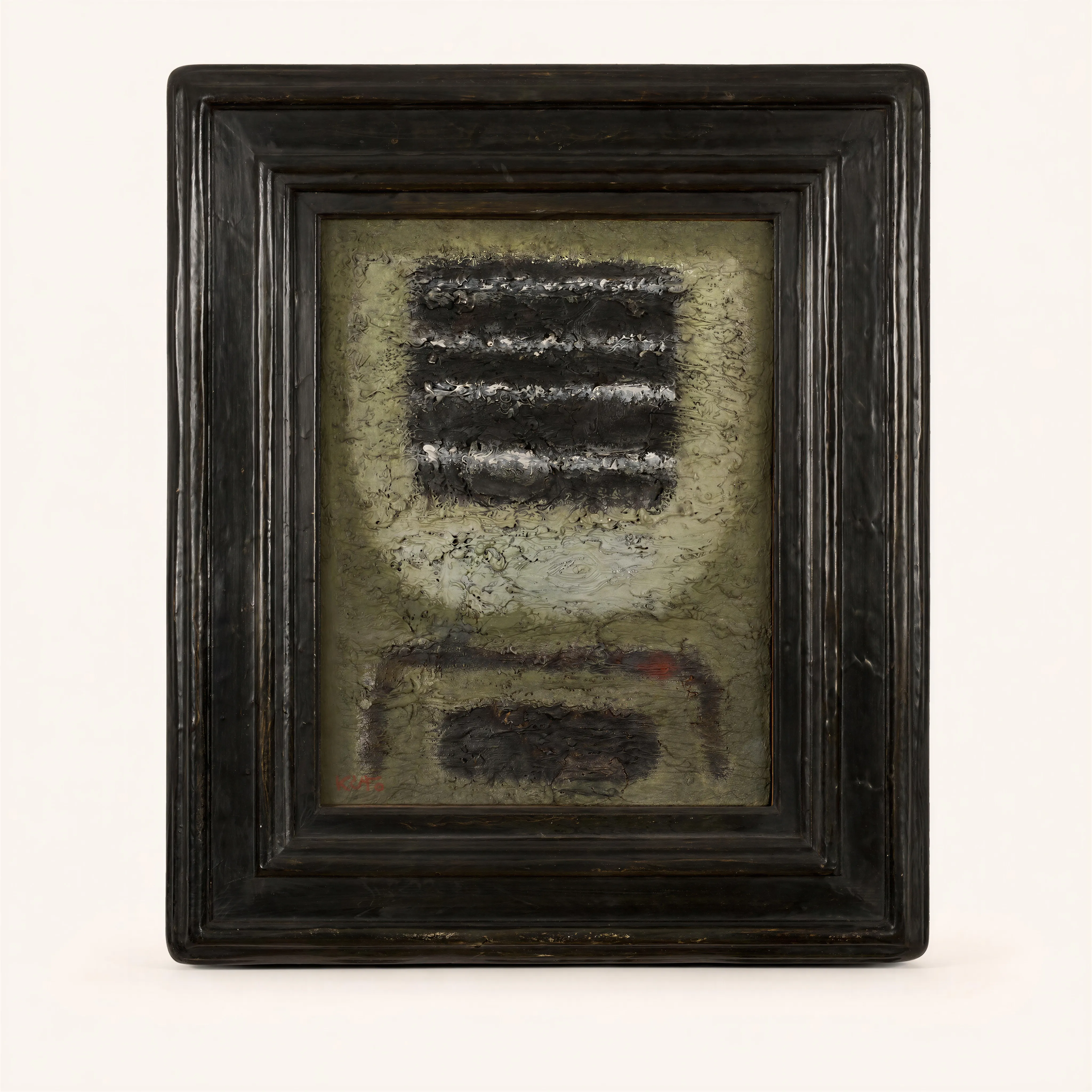
Akira Kito was a major post-war Japanese painter and a unique figure of the Parisian art scene during the 1950s and 1960s. Based in Paris from 1953 to 1970, he developed a personal body of work at the crossroads of Western modern art, the CoBrA movement, and Art Brut. His style is characterized by a singular fusion of delicate, deeply textured backgrounds and the raw power of graphic archetypes borrowed from primitive art.
Biography
Born into a long lineage of traditional Japanese artists, he chose to study Western art and moved to France in 1953 to attend the École des Beaux-Arts in Paris under Jean Souverbie, where he was introduced to Cubism.
Between 1955 and 1958, deeply influenced by Paul Klee, Jean Dubuffet, and Karel Appel, he entered a so-called "humorous" or "childish" phase, filled with naive characters painted over meticulously scratched and heavily worked chromatic backdrops.
In the late 1950s, fascinated by frequent visits to the Musée de l'Homme and prehistoric cave art, he steered his painting toward an esoteric and magical universe, crafting compositions of masks, dragons, and talismans with evocative titles such as “Amulette” or “Rêve noir”.
Historically represented by the Parisian gallery Lara Vincy, he returned permanently to Japan in 1970 to pursue his artistic journey. His paintings and lithographs are today preserved in prominent global institutions, including the Centre Pompidou, the Musée d'Art Moderne de Paris, and the National Gallery of Art in Washington.
"Akira Kito achieved a subtle and powerful synthesis between heterogeneous vocabularies. Whether painting a mask, a Japanese woman, or a dragon, he worked within simple compositions built on deep, scratched, and reworked backgrounds imbued with a mysterious and magical atmosphere.” Galerie Lara Vincy