Maison Daum Nancy
Founded 1878
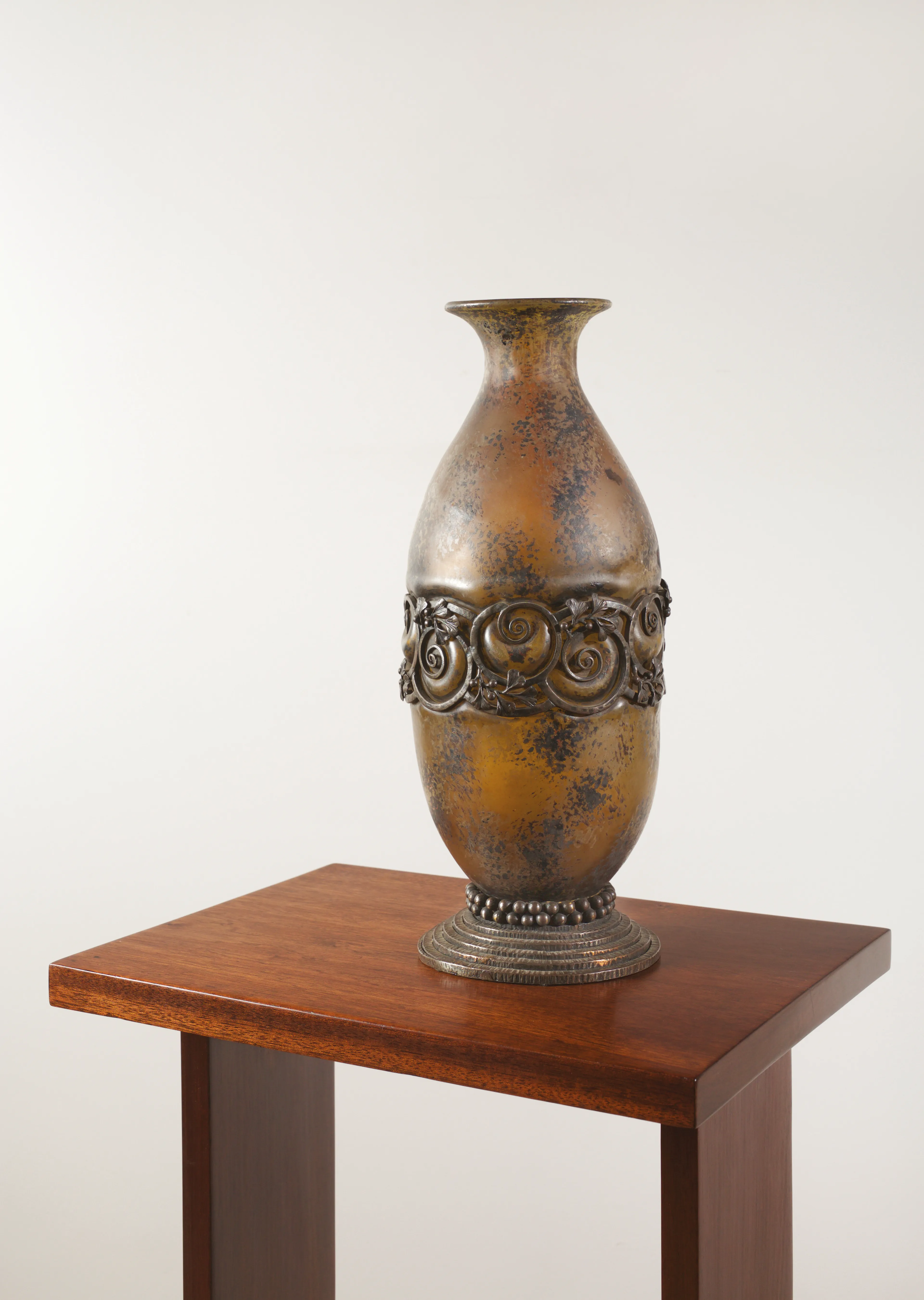
Maison Daum, founded in 1878 by Jean Daum, is a world-renowned French crystal and art glass manufacturer that served as a leading spearhead of the École de Nancy. Propelled to artistic heights by the brothers Auguste and Antonin Daum, it established itself as the great rival to Émile Gallé during the golden age of Art Nouveau. Renowned for its acid-etched cameo vases and its historical mastery of the “pâte de verre” (glass paste) technique, the firm successfully navigated changing eras by brilliantly adapting to Art Deco and contemporary artistic collaborations.
History
Taken over by brothers Auguste and Antonin Daum, the manufacture actively participated in founding the École de Nancy in 1901. It distinguished itself through naturalistic, multi-layered glass pieces, etched with acid or carved on a wheel, capturing the poetry of Lorraine's landscapes and flora.
At the turn of the 20th century, Daum revived and perfected the ancient technique of “pâte de verre” by partnering with craftsman and sculptor Almaric Walter. This unique sculptural process, yielding dense materials with fused, gemstone-like colors, became the eternal signature of the house.
Unlike other workshops of its time, Daum achieved a spectacular transition toward modernism in the 1920s under the leadership of Paul Daum. The company abandoned botanical themes for sleek geometric forms, using thick, translucent glass deeply engraved with sandblasting or acid.
Following World War II, the crystal works innovated with pâte de cristal and opened its studios to the greatest artists of the century. Masters like Salvador Dalí, Jean Cocteau, César, and Roland Topor sculpted their works there, permanently embedding Daum in the history of modern art.
"Glass is the most docile and mysterious material; it lends itself to all metamorphoses to trap light and color.”