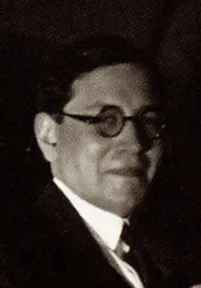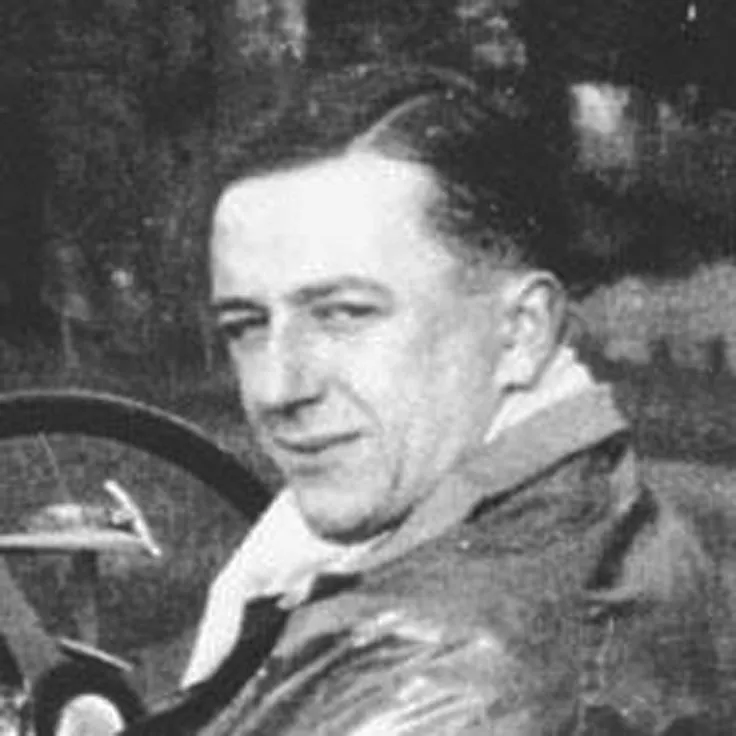
Robert Lallemant
1902 – 1954
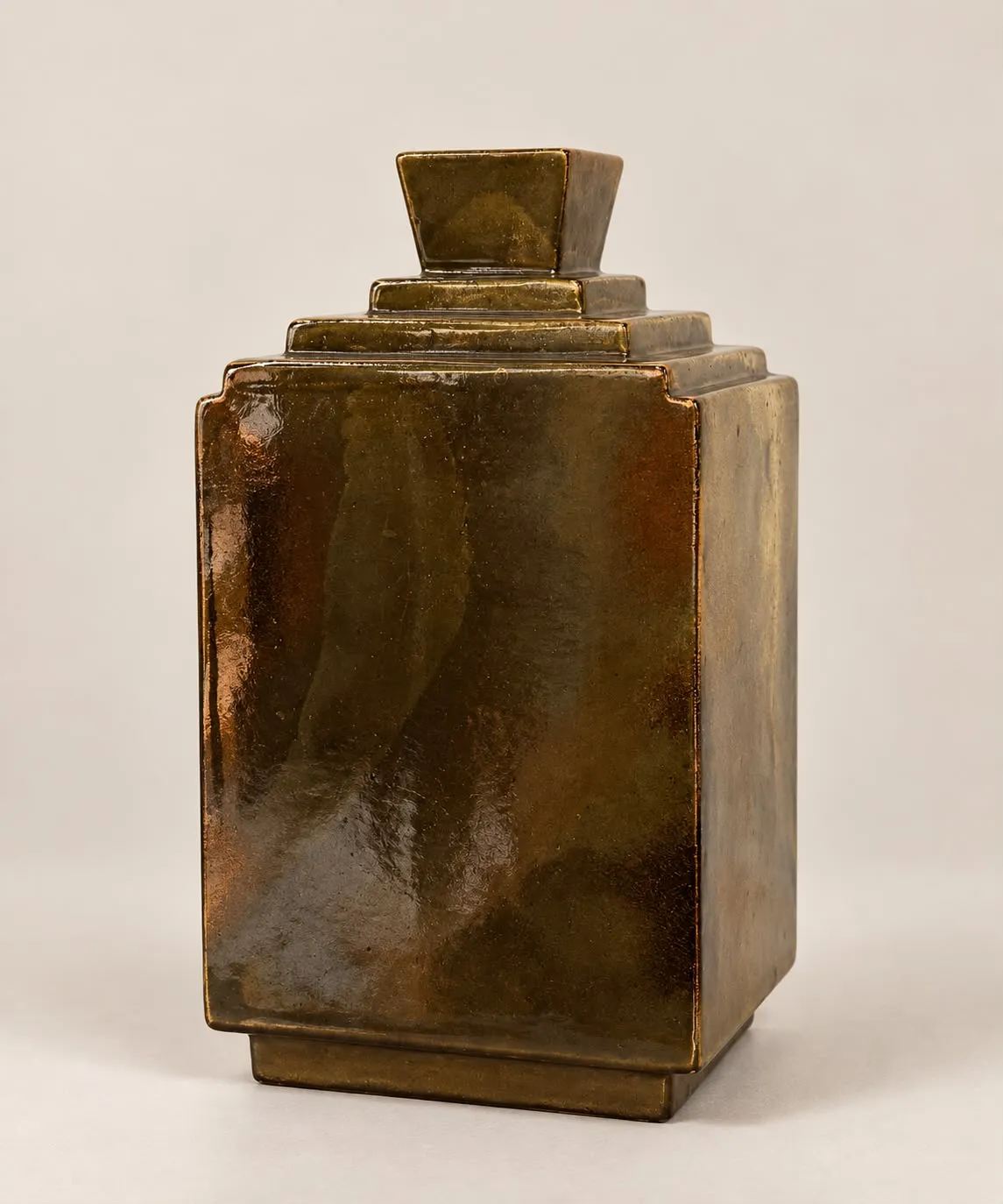
Robert Lallemant was a prominent French ceramicist and designer of the Art Deco and Modernist eras. A founding member of the “Union des Artistes Modernes” (UAM) alongside Robert Mallet-Stevens and Le Corbusier, he revolutionized ceramic art by treating pottery as genuine micro-architecture. Renowned for his bold geometric forms (building-vases, radio-vases, book-vases), his structurally rigorous body of work embodies the rationalist and urban spirit of the 1930s.
Biography
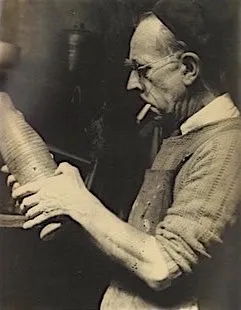
Trained at the Beaux-Arts in Dijon and at the Sèvres Manufactory, he mastered clay craftsmanship before opening his own studio in Paris in the mid-1920s.
In 1929, he rejected floral and narrative decoration to join the avant-garde UAM movement, creating clean, functional, and Cubist-inspired volumes.
Drawing inspiration from urban architecture and industrial technology, he crafted iconic pieces shaped as skyscrapers, radios, and books, utilizing crackle-glazed earthenware accented with bold colors and sharp black lines.
During the 1930s, he gradually stepped away from ceramics to work in film as a set designer and assistant director, making his surviving ceramic creations exceptionally rare and sought-after today.
"Robert Lallemant does not merely make pottery: he erects small architectures in earthenware where pure geometry meets the spirit of the modern city.”