Edgar Brandt
1880 – 1960
Edgar Brandt was a French art metalsmith and industrialist, universally regarded as the undisputed master of Art Deco ironwork. Blending traditional craftsmanship with cutting-edge industrial technologies, he revolutionized the working of wrought iron and bronze in the early 20th century. His monumental creations, spanning from the gates of the 1925 Exhibition to the Eternal Flame casing under the Arc de Triomphe, embody the pinnacle of French architectural elegance during the interwar period.
Biography
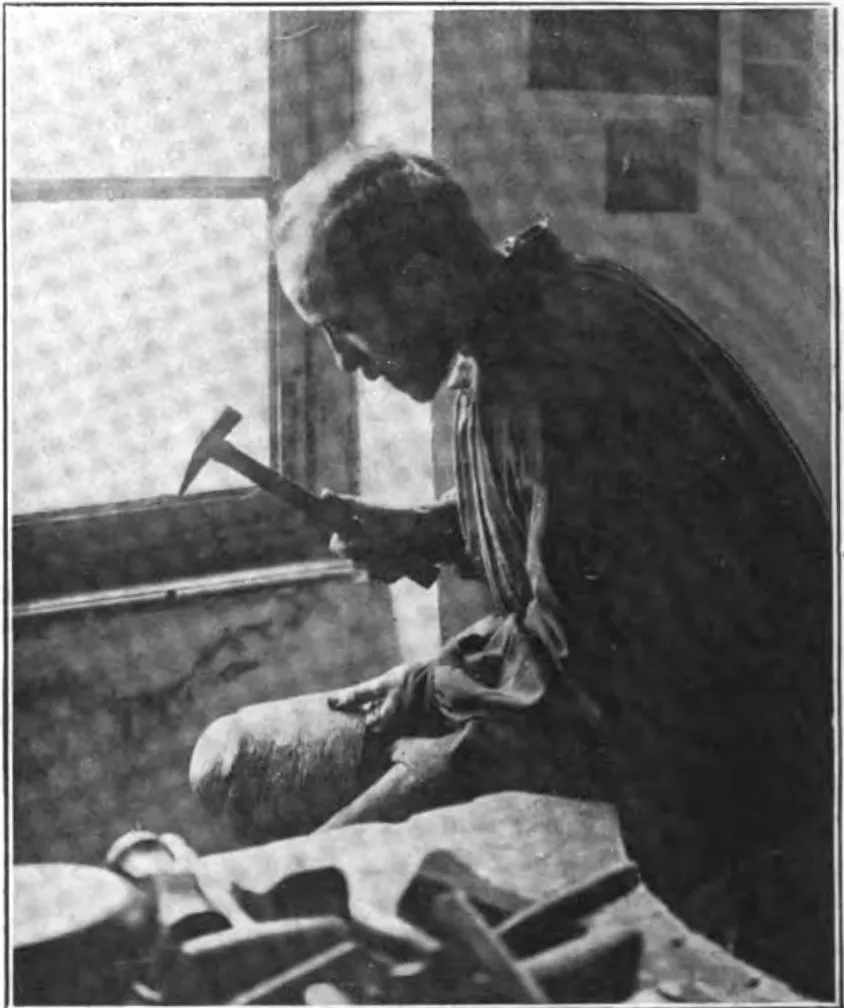
A graduate of the Écoles Nationales d'Arts et Métiers, he opened his Parisian workshop in 1902. Unlike handmade purists, he fully embraced the industrial innovations of his era (such as oxy-acetylene welding and power hammers) to shape metal with unprecedented power and geometric precision.
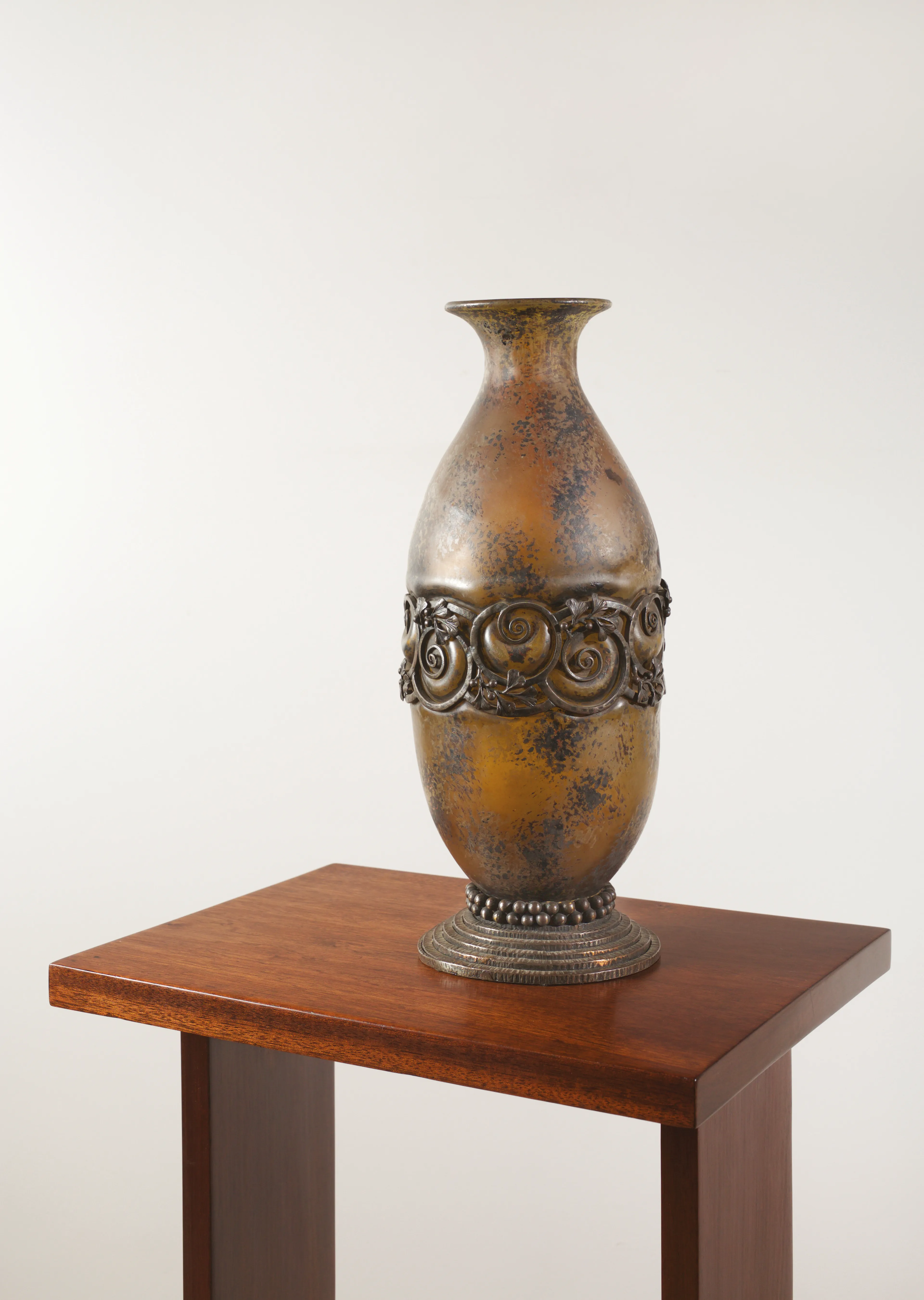
A true star of the 1925 International Exhibition in Paris, he designed the monumental gates for the “Porte d'Honneur “ and the famous “L'Oasis screen”. His style is characterized by elegant, repetitive stylized motifs: symmetrical scrolls, fans, cascading fountains, and foliage in patinated or gilded wrought iron.
Highly sought after by leading architects, he adorned banks, official palaces, and the legendary ocean liners of the era with his ironwork. His most sacred work remains the 1923 creation of the chased bronze vessel housing the Eternal Flame under the Arc de Triomphe in Paris.
Parallel to his artistic career, Brandt was a top-tier military engineer. He founded the armament branch of his company and designed highly effective infantry mortars and shells (the Brandt mortars), spectacularly demonstrating his absolute mastery of heavy metallurgy.
"The artist must utilize the means that science has placed at his disposal; to preserve or hold on to the old methods is an absurdity."