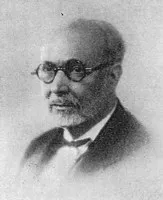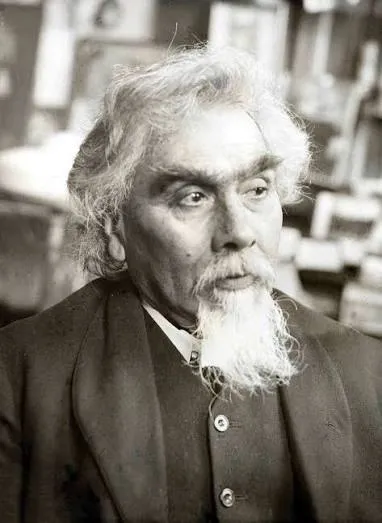
Jan Toorop
1858 – 1928
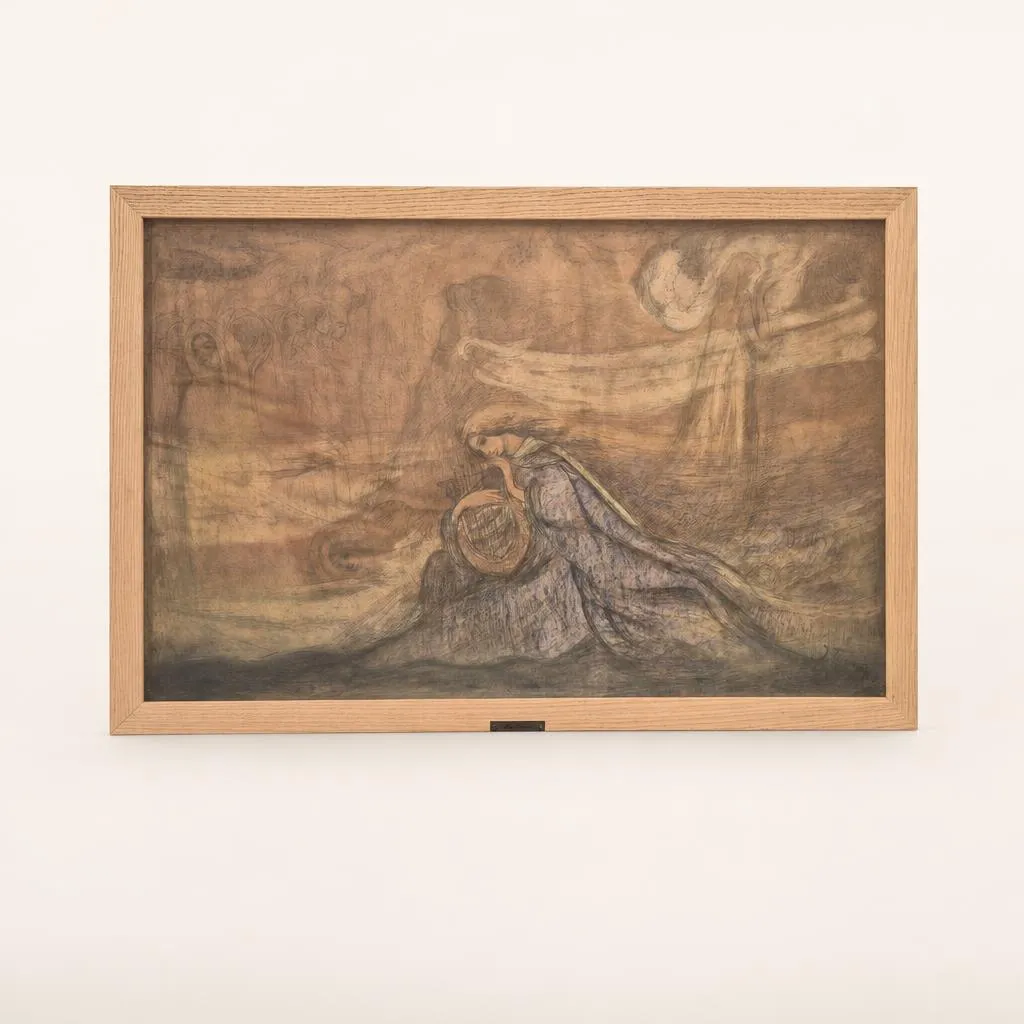
Jan Toorop was a major Dutch-Indonesian painter, draftsman, and printmaker, standing as a pivotal figure of Symbolism and the Art Nouveau (Jugendstil) movement in Europe. Renowned for his sinuous, Javanese-inspired linear rhythm, mystical allegorical compositions, and iconic poster for “Delftsche Slaolie” (which gave its name to Dutch Art Nouveau), he served as a crucial bridge between the Belgian avant-garde (Les XX), Neo-Impressionism, and sacred art.
Biography
Born on the island of Java, he carried the artistic influence of traditional Indonesian motifs and “wayang” shadow puppets throughout his life. Moving to the Netherlands at age 13, he studied at the Rijksakademie in Amsterdam and the Royal Academy of Fine Arts in Brussels.
Joining the avant-garde Belgian group Les XX in 1885, he associated with James Ensor and Auguste Rodin. He experimented with Pointillism alongside Georges Seurat and Paul Signac before developing his own unique graphic language.
n the 1890s, he produced iconic Symbolist masterpieces (such as “The Three Brides”, 1893) defined by mesmerizing, fluid linework. His famous commercial poster for Delft Salad Oil (”Delftsche Slaolie”, 1893), featuring whip-lash hair motifs, became so influential that Dutch Art Nouveau was popularly dubbed the “Slaoliestijl” ("Salad Oil style").
Converting to Catholicism in 1905, he turned his artistic focus toward religious themes, stained glass, and graphic prints, adopting a more geometric, hieratic style while maintaining widespread acclaim until his death.
"Jan Toorop has woven an art form where Javanese line meets Symbolist mystery: in his work, every curve is a soulful arabesque and a hymn to decorative poetry.”