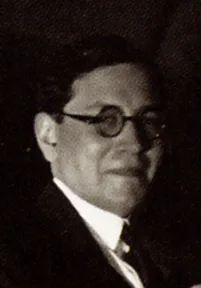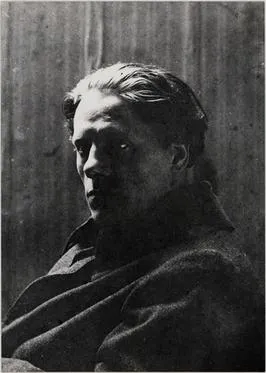
Jean Lambert-Rucki
1888 – 1967
Jean Lambert-Rucki was a Polish-born painter, sculptor, and decorator, who became a naturalized French citizen and a major figure of the Montparnasse avant-garde and Art Deco. His highly original body of work merged Cubist deconstruction, Surrealism, and African tribal art. Renowned for his stylized, elongated, and humorous human and animal figures, he was the secret collaborator of master lacquerer Jean Dunand and a founding member of the “Union des Artistes Modernes” (UAM), leaving a lasting mark on 20th-century decorative and sacred arts.
Biography
After studying at the Academy of Fine Arts in Krakow, he arrived in Paris in 1911 and immediately immersed himself in the bohemian scene of Montparnasse. He briefly shared a destitute studio with Amedeo Modigliani, befriended Chaim Soutine, and exhibited at the famous “Salon de la Section d'Or”. His early paintings and sculptures integrated the lessons of emerging Cubism.
In the 1920s, his meeting with Jean Dunand sealed one of the most fruitful collaborations of the Art Deco era. Lambert-Rucki, a tireless creator of forms, worked in the shadows to design the drawings, geometric motifs, screen reliefs, and sculpture models that Dunand executed in lacquer or metalwork. This partnership gave birth to absolute masterpieces of the period.
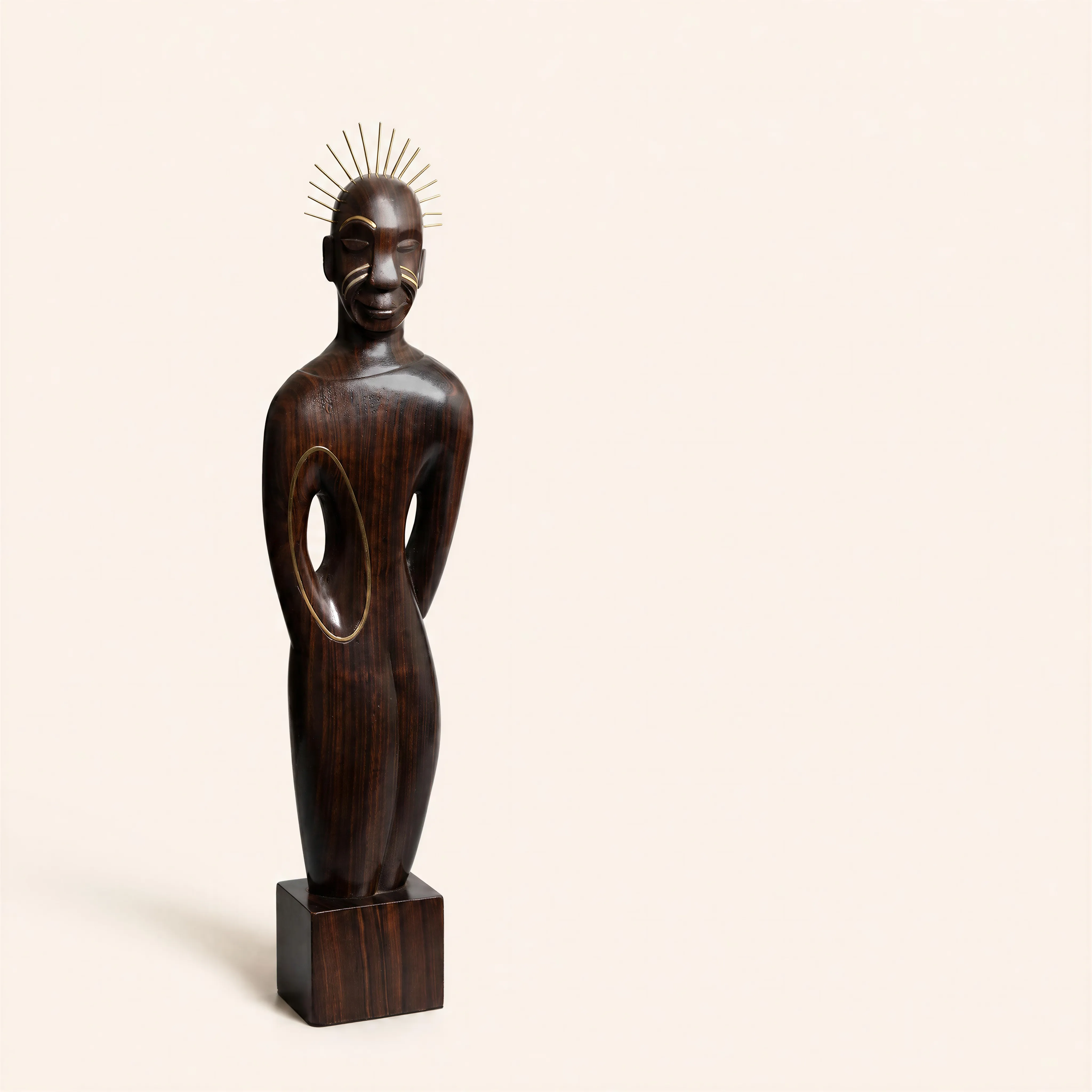
Fascinated by African and Oceanic arts discovered in Parisian museums, Lambert-Rucki developed a unique sculptural style. He created slender characters, masks in high relief, and animals (monkeys, birds, dogs) with pure geometric lines. His works played on a striking contrast between rigorous volumes and a very modern, poetic irony.
In 1929, he broke with traditionalism by becoming one of the early members of the UAM alongside Robert Mallet-Stevens and René Herbst. From the 1930s onward, he put his sleek aesthetic at the service of the Church. He revolutionized religious art by creating crucifixes, statues of saints, and monumental Stations of the Cross in cement or bronze (notably for the Church of the Holy Spirit in Paris), a mystical and artistic quest that occupied him until his death in 1967.